
Friendly Note: TheInspiringSouls.com shares general info for curious minds 🌟 Please fact-check all claims and always check health matters with a professional 💙
In the rolling hills of Worcestershire, England, something extraordinary is happening in a quiet garden that would make any paleontologist’s heart skip a beat. Pamela and Alistair Thompson, a retired couple with green thumbs and a passion for the unusual, have been carefully tending to what most people would consider just another tree. But this isn’t just any ordinary plant growing in their backyard.
What started as a modest purchase at a charity auction has turned into a botanical breakthrough that’s capturing the attention of scientists worldwide. The story begins in 2010, when the Thompsons spotted an 18-inch sapling at a local charity event and decided to take it home for £70. Little did they know that this small investment would place them at the center of one of the most exciting conservation stories of our time.
A Discovery That Shook the Scientific World
To understand why experts are so excited about what’s happening in the Thompsons’ garden, we need to travel back to 1994. That’s when park ranger David Noble was exploring a remote canyon in Australia’s Wollemi National Park and stumbled upon something that shouldn’t have existed. Hidden in a secluded gorge, he found a small grove of trees that scientists had only seen as fossils before.
These weren’t just any ancient trees. What Noble had discovered was a living remnant from the age of dinosaurs, a species that had somehow survived for over 90 million years while the world around it changed dramatically. The scientific community was stunned. It was like finding a living T-Rex wandering around in the modern world.
The tree Noble found was given the scientific name Wollemia nobilis, but it quickly earned a much more exciting nickname: the “dinosaur tree.” This wasn’t just marketing hype. These prehistoric plants had genuinely shared the Earth with massive sauropods and fierce predators during the Cretaceous period.
What Makes These Ancient Survivors So Special
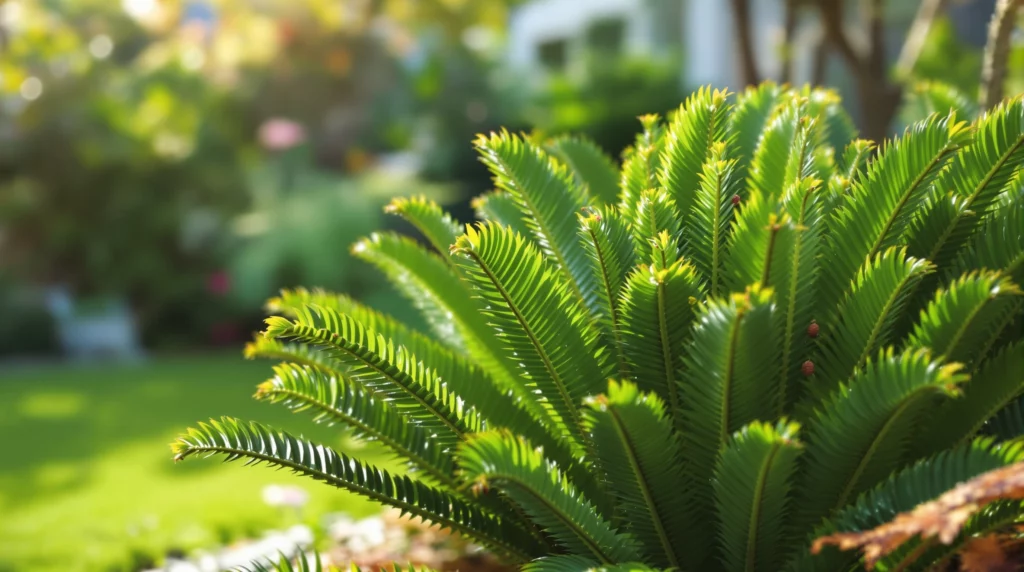
The Wollemi pine doesn’t look like your typical backyard tree. Its bark has a distinctive bubbly texture that looks remarkably like chocolate mousse, while its leaves spiral around the branches in an elegant pattern that seems almost otherworldly. In their natural habitat, these ancient giants can tower up to 40 meters high, often growing multiple trunks from a single root system.
But perhaps most remarkably, some of the trees discovered in that Australian canyon are believed to be over 1,000 years old. These silent witnesses have watched civilizations rise and fall, weathered countless storms, and somehow managed to survive in their secret hideaway while the rest of their species vanished from the fossil record.
The wild population of Wollemi pines is heartbreakingly small. Fewer than 100 mature trees exist in their natural habitat, confined to just a few isolated pockets within Wollemi National Park. The exact locations remain a closely guarded secret to protect these botanical treasures from human interference and disease.
A Garden Transformed
Back in Worcestershire, the Thompsons’ small sapling had bigger plans than anyone imagined. Over the years, with careful attention and the perfect growing conditions near the Malvern Hills, their modest purchase began to flourish. The 18-inch sapling slowly but steadily grew, eventually reaching over 13 feet in height.
Alistair, a former surgeon, approached caring for their unusual tree with the same precision he once brought to the operating room. Pamela found herself drawn to the daily ritual of checking on their prehistoric guest, describing the experience as filled with wonder and anticipation.
The couple knew they had something special, but they had no idea just how special it would become. Friends and neighbors would often comment on the unique appearance of their tree, with its distinctive bark and unusual foliage standing out dramatically from the typical English garden plants surrounding it.
The Moment That Made History
This spring, the Thompsons made a discovery that sent ripples of excitement through the botanical community. Their Wollemi pine had done something that had never been documented before outside of Australia: it was producing both male and female cones simultaneously.
For most people, this might seem like a fairly ordinary botanical event. Trees produce cones all the time, right? But for the Wollemi pine, this was anything but ordinary. This was the first time anyone had witnessed a Wollemi pine bearing fruit outside its native Australian habitat, marking a potential turning point in the species’ conservation story.
The significance of this moment cannot be overstated. Until now, conservation efforts for the critically endangered Wollemi pine had relied heavily on cloning techniques. While effective for maintaining numbers, cloning produces genetically identical offspring, which limits the species’ genetic diversity and makes entire populations vulnerable to diseases and environmental changes.
The emergence of fertile cones on the Thompsons’ tree introduces the thrilling possibility of sexual reproduction, which generates the genetic variation essential for any species’ long-term survival and adaptability.
A Race Against Time
The wild Wollemi pines have faced their share of challenges in recent years. The devastating Australian bushfires of 2019-2020 posed a grave threat to the ancient groves, burning over a million acres and nearly wiping out the remaining wild populations. Recognizing the irreplaceable value of these botanical relics, specialized firefighting teams were deployed specifically to protect them.
Using aerial fire retardants and ground irrigation systems, these dedicated teams worked around the clock to safeguard the trees. Miraculously, many Wollemi pines survived, standing as green beacons of hope amid the charred landscape. But the close call served as a stark reminder of just how precarious the species’ situation remains.
This vulnerability is precisely why what’s happening in the Thompsons’ garden is so important. By successfully cultivating and now potentially reproducing Wollemi pines outside Australia, conservationists are creating a distributed network of trees that could serve as a genetic lifeline for the species.
The Science of Ancient Survival
The Wollemi pine belongs to an exclusive club of so-called “living fossils” – species that have remained virtually unchanged for millions of years. These remarkable survivors offer scientists a unique window into Earth’s ancient past, showing us what life was like when our planet was a very different place.
During the Cretaceous period, when Wollemi pines first appeared, the world was warm and humid. Massive ferns, cycads, and giant conifers dominated landscapes that were home to some of the largest creatures ever to walk the Earth. The plants that thrived during this era had to be tough, adaptable, and resilient to survive the dramatic changes that would come.
The fact that Wollemi pines have survived mass extinctions, ice ages, and countless other environmental upheavals speaks to their incredible evolutionary success. Each tree is essentially a living time capsule, carrying genetic information that has been passed down through millions of years of Earth’s history.
More Than Just Gardening
For the Thompsons, caring for their Wollemi pine has become much more than a gardening hobby. Alistair compares the experience to “expecting panda babies,” highlighting just how rare and precious this moment truly is. Pamela describes their daily routine of checking the developing cones as being like children on Christmas morning, filled with excitement and anticipation.
The couple has big plans for any viable seeds their tree might produce. Rather than keeping them for themselves, they intend to share the seeds with botanical gardens around the world, contributing to a global network of genetically diverse trees. This grassroots conservation effort demonstrates how ordinary people can play vital roles in preserving Earth’s natural heritage.
Their story has also inspired their local community. Through the National Garden Scheme, the Thompsons open their garden to visitors, giving people the chance to see a living piece of prehistory up close. Many visitors leave with a new appreciation for conservation and the incredible diversity of plant life on our planet.
The Challenge of Growing Dinosaur Trees
While the Thompsons’ success might inspire others to try growing their own Wollemi pine, it’s important to understand that these aren’t typical garden plants. Cultivating a dinosaur tree requires specific conditions and careful attention to detail.
Wollemi pines need well-drained soil, filtered sunlight, and protection from harsh frost. They’re also slow-growing and can be sensitive to environmental stress. Alistair cautions that nurturing a Wollemi pine is a serious commitment to maintaining a living fragment of Earth’s distant past, not a casual gardening project.
For those genuinely interested in taking on this challenge, specialized nurseries and botanical gardens occasionally offer Wollemi pine saplings. Owning one provides a unique opportunity to connect with a lineage that predates humanity by millions of years, serving as a daily reminder of the planet’s incredible natural history.
A Symbol of Hope and Resilience
The Wollemi pine’s story resonates far beyond the world of botany. In an age when species are disappearing at an alarming rate, the rediscovery and successful cultivation of these ancient trees offers a powerful symbol of hope. It shows us that with dedication, scientific knowledge, and a bit of luck, we can sometimes bring species back from the brink of extinction.
The Thompsons’ achievement also highlights the important role that citizen conservationists can play in protecting biodiversity. You don’t need to be a professional scientist or work for a major institution to make a meaningful contribution to conservation efforts. Sometimes, all it takes is curiosity, dedication, and the willingness to care for something extraordinary.
As climate change and habitat destruction continue to threaten plant and animal species around the world, success stories like this one remind us that extinction doesn’t have to be inevitable. With the right approach, even species that have been reduced to tiny populations can potentially recover and thrive.
Looking to the Future
The emergence of cones on the Thompsons’ Wollemi pine represents more than just a gardening milestone. If the seeds prove viable, each one could give rise to a genetically unique sapling, potentially launching a new chapter in the species’ conservation story. Botanists from prestigious institutions like Kew Gardens have expressed tremendous excitement about this development.
The success in Worcestershire also opens up possibilities for Wollemi pine cultivation in other parts of the world. As more people learn about these remarkable trees and their conservation needs, we may see additional populations established in suitable climates around the globe.
Perhaps most importantly, the Thompsons’ story demonstrates the power of individual action in conservation. Their decision to purchase and carefully tend a small sapling has contributed to one of the most significant developments in Wollemi pine conservation since the species’ rediscovery.
In a world that often feels dominated by environmental challenges and bad news about biodiversity loss, the sight of an ancient tree producing new life in a quiet English garden offers something precious: hope. It reminds us that nature is incredibly resilient, and that sometimes, with the right care and conditions, life finds a way to not just survive, but thrive.
Thanks to the dedication of people like the Thompsons, along with scientists and conservationists around the world, the Wollemi pine’s remarkable journey continues. Rooted in the deep history of our planet yet reaching toward a future where this extraordinary species may once again flourish, these living fossils stand as testament to the enduring power of life itself.