
Friendly Note: TheInspiringSouls.com provides general information for inquisitive readers 🌟 Please verify all information and always consult health issues with a medical professional 💙
Imagine this scenario: You’re dining peacefully at a quiet restaurant when the individual at the neighboring table begins loudly crunching their meal. Your pulse quickens, tension builds in your body, and you experience a powerful impulse to either escape or address the situation. If this experience resonates with you, you’re not alone, and your reaction is completely valid.
What many people dismiss as simple pickiness or an inability to “just ignore it” might actually be something much more complex. Recent scientific research is shedding light on why certain everyday sounds can trigger such intense reactions in some people, and the findings might surprise you.
When Normal Sounds Become Unbearable
We all have sounds that annoy us. The screech of nails on a chalkboard, construction noise early in the morning, or a car alarm going off at 3 AM. But for some people, the reaction to specific sounds goes far beyond normal annoyance. Noises like someone eating, breathing heavily, or even clicking a pen can trigger an intense emotional and physical response that feels completely out of proportion to the actual noise.
This isn’t about being dramatic or attention-seeking. Scientists have identified this condition as misophonia, which literally translates to “dislike of sound.” But despite its name, it’s not really about hating all sounds. Instead, it’s a very specific sensitivity to certain trigger noises that most people wouldn’t even notice.
The most common triggers include mouth sounds like chewing, swallowing, or lip smacking, but can also extend to repetitive noises like pen clicking, foot tapping, or even the sound of someone typing. What makes it even more complex is that the same sound might trigger a strong reaction when made by one person but not another.
More Than Just An Annoyance
Here’s where things get really interesting. When researchers started studying people who reported these intense reactions to certain sounds, they discovered something remarkable. A research team from the University of Newcastle in England chose to examine the brains of individuals with misophonia to understand what was occurring during these episodes.
Using MRI scans, they studied 44 participants, about half of whom suffered from misophonia. They had them listen to three types of sounds: neutral ones like rain or boiling water, unpleasant sounds like screaming or crying, and trigger sounds like breathing or eating noises.
The results were eye-opening. The neural activity of individuals with misophonia didn’t just show a stronger reaction to trigger sounds. They showed actual structural and functional differences compared to people without the condition.
The Science Behind The Reaction
The study found that individuals with misophonia exhibit irregularities within their emotion regulation mechanisms. Upon exposure to triggering sounds, their neural systems essentially become hyperactive. The brain imaging revealed atypical connections between areas that process auditory information and regions managing emotional responses.
But it wasn’t just about brain activity. Scientists also discovered increased levels of myelination (the brain’s protective coating system) among those with misophonia. This indicates there are actual physical distinctions in their neural architecture, not just functional ones.
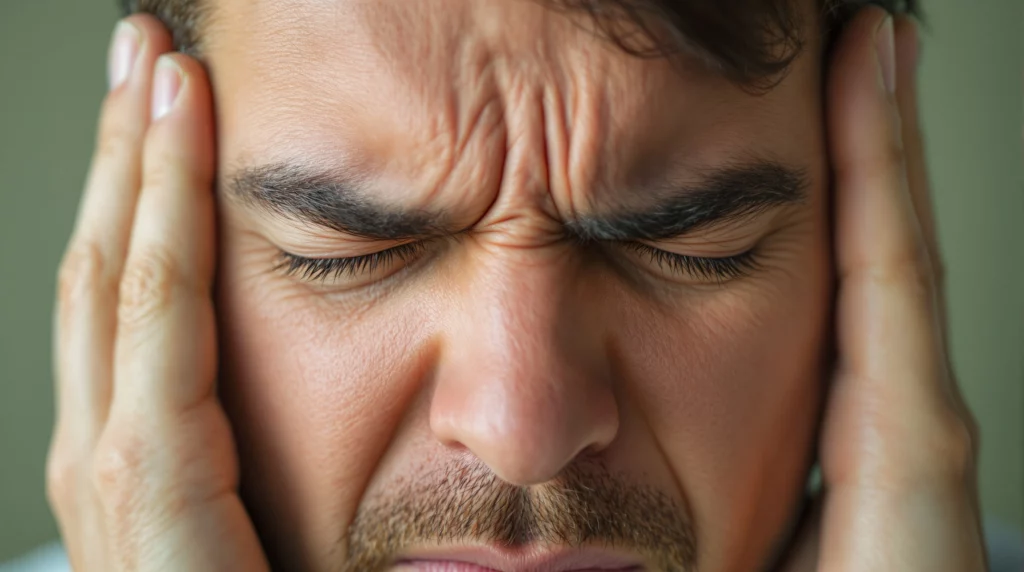
These neurological changes translate into very real physical symptoms. Individuals with misophonia don’t simply feel irritated when they encounter trigger sounds. They undergo elevated heart rate, perspiration, muscular tension, and what resembles a fight-or-flight reaction. Some describe feeling trapped, panicky, or overwhelmed with rage.
The Emotional Toll
Living with misophonia can be incredibly isolating and distressing. Imagine having to leave family dinners because the sound of chewing becomes unbearable. Or avoiding movie theaters because of people eating popcorn. Or feeling intense anger toward loved ones over sounds they can’t help making.
The condition often leads to significant changes in behavior. People might wear headphones constantly, avoid social situations involving food, or develop elaborate coping strategies to manage their environment. Some report feeling guilty or ashamed about their reactions, especially when friends and family don’t understand the intensity of their experience.
The impact extends beyond just the moments when trigger sounds occur. Many people with misophonia develop anticipatory anxiety, constantly scanning their environment for potential triggers. This hypervigilance can be exhausting and can significantly affect quality of life.
Recognition As A Real Disorder
One of the most important aspects of this research is that it provides concrete evidence that misophonia is an authentic medical condition, not just a personality quirk or lack of tolerance. Dr. Sukhbinder Kumar, who led the Newcastle University research, emphasized this point in his statement about the findings.
“Many individuals with misophonia will find this news encouraging, as we have now shown for the first time that there are demonstrable differences in brain structure and function among those affected,” he stated. The research demonstrates “significant neurological alterations that serve as additional proof to persuade a doubtful medical establishment that this constitutes a legitimate condition.”
This validation is crucial for people who have been told to “just ignore it” or “get over it” by friends, family, or even healthcare providers. The scientific evidence clearly shows that their brains are processing these sounds differently, making it impossible to simply will away the reaction.
However, despite growing recognition among researchers and specialists, misophonia is not yet included in major diagnostic manuals like the DSM-5 or ICD-11. This means some clinicians and insurance providers may not recognize it as an official disorder, which can create barriers to getting appropriate treatment and support.
Treatment Options And Hope
While there’s no cure for misophonia, researchers are optimistic that better understanding of the condition will lead to more effective treatments. The Newcastle University team believes their research could eventually lead to therapies that help people learn to self-regulate their reactions to trigger sounds.
Currently, the most evidence-based treatment approach is Cognitive Behavioral Therapy (CBT), which helps people develop coping strategies and modify their thought patterns around trigger sounds. Some people also benefit from progressive muscle relaxation techniques, acceptance and commitment therapy, or environmental modifications like using white noise machines or specialized earplugs.
Treatment often focuses on improving quality of life rather than eliminating the condition entirely. This might involve learning to manage the physical response to triggers, developing better coping strategies, or finding ways to modify the environment to reduce exposure to problematic sounds.
Moving Forward With Understanding
The growing body of research on misophonia represents a significant step forward for the millions of people who experience these intense reactions to everyday sounds. For too long, their struggles have been minimized or dismissed as mere annoyance or oversensitivity.
The neurological evidence provides validation that this is a real, measurable difference in brain function and structure. It’s not about being difficult or attention-seeking. It’s about having a brain that processes certain sounds in a fundamentally different way.
As research continues, there’s hope for better diagnostic tools, more effective treatments, and greater recognition within the medical community. The ultimate goal is to help people with misophonia live fuller, less restricted lives while managing their condition.
For now, the most important message is one of understanding and validation. If you or someone you know experiences intense reactions to specific sounds, know that it’s real, it’s not your fault, and there is help available. The science is finally catching up to what many people have known all along: sometimes our brains just work differently, and that’s okay.